Posts

Showing posts with the label Worship

"Worship in an Age of Anxiety" by J. Michael Jordan. A Review

Image
  Worship in an Age of Anxiety: How Churches Can Create Space for Healing J. Michael Jordan IVP Academic ISBN: 978-1-5140-0610-8; June 2024; $32.00   The rise of anxiety, depression, and several other mental health issues are being noted by plenty of authorities across the social spectrum. As a Christian minister who has engaged with several people exhibiting different forms of these, and as an author who has taken a stab at various ways anger and anxiety are being manipulated in our time, I also am concerned. Therefore, I was very interested in “Worship in an Age of Anxiety: How Churches Can Create Space for healing,” which is a 248-page paperback in the IVP Academic series Dynamics of Christian Worship . J. Michael Jordan is Dean of the Chapel and Associate Professor of Religion at Houghton University in Houghton, NY. He is also an ordained Wesleyan pastor. The book is both diagnostic as well as filled with helpful proposals for congregations to think through on ho...
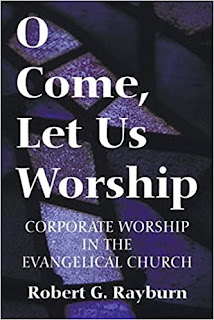
"O Come, Let Us Worship" by Robert G. Rayburn. A Short Review

Image
  Okay. It may not be the most thrilling book you'll ever read, but it is very useful, well thought out, and instructive. Robert G. Rayburn wrote this volume in the early 1980s as an elder pastor to ministerial students and young ministers. It develops the rationale of seeing the Sunday morning worship assembly not as evangelistic; not as a Christian version of a Tupperware party; but as a time when Christians gather in dialogical adoration of God. Rayburn gives many persuasive reasons and reflections on how to see each element of worship in this way. He does write from a Presbyterian and Reformed perspective, but he draws on church history, the Book of Common Prayer, and other traditions. And most of all, he is guided by the sacred Scriptures. This volume should be read as if you were sitting down with an older Christian minister who is graciously coaching you as a worship leader and as a pastor. In the end, you may not embrace everything he recommends, but you will see the worshi...

"God Sings!" by Douglas Bond. A Review

Image
God Sings! by Douglas Bond My rating: 4 of 5 stars Most Protestants no longer realize that one of the major rallying points of the Reformation was the return of worship, especially congregational singing, to the parishioners. For centuries only the professionals (priests, monks and cantors) sang and chanted the divine service, up front, close to the altar. The congregants rarely knew the music or the songs, and thus, seldom sang. Then came the Reformation with the Reformers reading not only sacred Scripture, but also the early church pastors and theologians. To their surprise they found it was standard fair for the congregants to sing and engage in the liturgy. And so, the Reformation included congregational singing and involvement in worship. But slowly, especially over the last several decades, the descendants of the Reformation are returning to the up-in-front professionalization in worship. Therefore, I was interested to receive the 270-page paperback “God Sings! (And Ways We T...

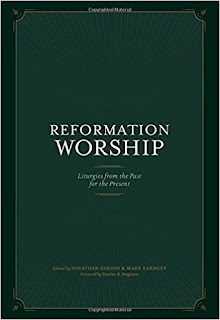
"Reformation Worship" ed. by Jonathan Gibson and Mark Earngey. A Review

Image
Reformation Worship: Liturgies from the Past for the Present Ed. by Jonathan Gibson and Mark Earngey New Growth Press 1301 Carolina St., Suite L-101 Greensboro, NC 27401 ISBN: 978-1-948130-21-9; 23 April 2018; $69.99 Many American Presbyterian and Reformed believers are either out of touch with their Reformation roots, or have only snippets of information. One area where this is glaringly clear is in regard to worship, and specifically liturgy. Jonathan Gibson, assistant professor of Old Testament at Westminster Theological Seminary,   and Mark Earngey, doctoral candidate at the University of Oxford, have accomplish a yoeman’s job in their new 736 page hardback “Reformation Worship: Liturgies from the past for the Present”.   This weighty tome is ideal for liturgists, worship leaders, pastors, seminary professors, and highly interested parties. It is a reference work that “aims to recover and reaffirm the significant part that worship played in the Magisteria...

Reflecting on the Westminster Confession of Faith 21-"Of Religious Worship and the Sabbath Day"

Image
Okay, so I'm thinking through the subject of Worship as the Westminster Confession of Faith (WCF) plays it out. What is below is simply a "thinking-out-loud" chart of the three basic "Regulative Principles of Worship" in Christianity (each branch, and all sub-branches have a regulative principle, or so it seems to me; but we simply draw up the lines in different places). Give it a look, and let me know what your thoughts are: 1.       Position A (More Constricted Position): Ÿ   True Worship -Only what is commanded in Scripture. Ÿ   False Worship -Anything outside what is commanded in Scripture. 2.       Position B (More Lutheran, Anglican, Some Reformed, Eastern Orthodox, Roman Catholic) Ÿ   True Worship -What is commanded (and anything not specifically forbidden is permitted and at times mandated). Ÿ   What is prescribed by Church Councils sometimes required sometimes permitted, Ÿ   Gu...

Book Review: "Story-Shaped Worship" by Robbie F. Castleman

Story-Shaped Worship: Following Patterns From the Bible and History   Robbie F. Castleman IVP Academic (imprint of InterVarsity Press) PO Box 1400 Downers Grove, IL 60515-1426 www.ivpress.com Copyright: 2013 ISBN: 978-0-8308-3964-3; $16.00 Reviewed for Deus Misereatur by: Rev. Dr. Michael Philliber Foundational Formularies - 4 Stars out of 5      In my experience, after years of sitting in the pew and now years of standing in the pulpit, many people have given little thought to the "why, wherefore, and how come" of Christian worship. If there is any gauge by which to decipher the rightness or wrongness of any worship service, it is usually a subjective, "Was I blessed" or "I really felt like it encouraged me" kind of decoder ring. That's what makes "Story-Shaped Worship" by John Brown University associate professor of biblical studies and theology, Robbie F. Castleman, an important resource. This easily readable, 224 page paperba...

The Church's Main Business

Cornelius Plantinga, in his book, “ Beyond Doubt ”, writes, “Before anything else, the Christian church worships. That is the church’s main business” (276). John Piper asserts the same point in “ Let the Nations Be Glad ”, “Missions is not the ultimate goal of the church. Worship is. ( . . . ) Worship is ultimate, not missions, because God is ultimate, not man” (11). And along with Missions not being the ultimate goal of the church, I would add that the same goes for evangelism.  By declaring God’s character, adoring his majesty, dwelling on and cherishing his merciful kindnesses, we are being more truly what we were originally created - and re-created – to do: Worship God! Plantinga observes further: “Answering this call to worship is a counter-cultural, almost subversive act because much contemporary culture thinks it is humiliating to surrender to God” (277). Contemplate the enormity of this. By worshiping God we are (1) becoming more aligned with who we are supposed to be; an...

Distinctly Christian Worship

The Westminster Confession of Faith, Chapter 21 paragraph 2, enunciates three very clear criteria for Christian worship that marks it out as distinctly Christian: “Religious worship is to be given to God, the Father, Son, and Holy Ghost; and to Him alone: not to angels, saints, or any other creature: and, since the fall, not without a mediator; nor in the mediation of any other but of Christ alone.” First, our worship is to be Trinitarian. It is good, appropriate, and proper that our worship includes Trinitarian Creeds, along with the Doxology, the Gloria Patri, Trinitarian prayers, hymns etc. This Trinitarian nature of Christian liturgy might need to be pointed out at times, and explained at other times, but should never be muted to accommodate visitors. It is one important criterion that sets apart our assemblies from a pep rally, or an Amway sales convention. I once was part of a worship service where the overtly Trinitarian portion of a hymn was truncated and dropped alto...

Humility and Worship

Image
Vanhoozer states, “ Humility is the manner of life worthy of the gospel, the key feature of Christian citizenship, the way a disciple enacts the mind of Christ” ("Pictures at a Theological Exhibition," 211). This is crucial, not only with regard to truth and Christian love , but especially to worship . The modern notion of worship evidenced all around us seems skewed. Presently it looks as if we moderns strut about before God and demand he pay homage to us. At heart we seem to think that God’s chief end is to glorify us, and enjoy us forever. But there is a better and more fitting way. “ Humble yourselves before the Lord, and he will exalt you ” (James 4.10). These words help to put everything into proper perspective with regard to Christian worship. Even the rock group, U2, says, “If you wanna kiss the sky, you gotta learn how to kneel.” That’s the God-designed pattern of Christian living, and even more, the God-formulated model of Christian worship. This pattern ...

Two Choices

One of the certainties is that Sunday is coming. And once again we Christians will be assembling in the name of the Lord to worship God Most High. Our task on that day will amount to one of two choices. First, we are to come with a deep delight and satisfaction with the knowledge that God is God, and we aren’t. That He is the beginning and the end, the one who speaks and it comes to pass, who turns the hearts of kings, prime ministers and presidents whichever way He chooses, and who upholds the fallen, heals the broken, and restors life to the dead. That God is God and we aren’t should be sweet drink to our thirsty souls; a cool, refreshing breeze to tame our hot heads; a satisfying morsel to fill us full with everlasting delights! “O taste & see that the LORD is good. How blessed is the man the trusts in Him” (Psalm 34.8) The second honest, and godly, option is to come realizing that we DON’T possess this delight. That we are about to offer prayerless prayers and praisesless ...

Real Religion: A Short Meditation on James 1.26-27

James wrote: “If anyone among you thinks he is religious, and does not bridle his tongue but deceives his own heart, this one's religion is useless. Pure and undefiled religion before God and the Father is this: to visit orphans and widows in their trouble, and to keep oneself unspotted from the world” (1.26-27). If we have true religion, then our religion is not just ritual, but it is also real, regulating, respectful and resourceful (Watch how James’s point works out in 2.1-9, reinforcing this little mediation). Ritual : The very things we do in our worship gatherings week after week, in word, sacraments, and prayer, punctuated with singing Psalms, hymns & spiritual songs, follow order and decorum so that we don’t blunder into God’s presence slipshod and superficial. Real : Our ritual splashes out from Sunday into Monday and beyond. No part-time, once-a-week religion but a full-time faith and an around the clock faithfulness. Regulating : Our ritualized, real religio...

Sacred Space 2

Transubstantiation, Zwinglian or Real Participation I was quite pleased while reading Joseph Ratzinger’s (now Pope Benedict XVI) piece “On the Meaning of Church Architecture” in his Dogma and Preaching , “We could summarize this finding in the formula: Jesus, the Crucified and Risen One, has replaced the Temple. Or, in a way that more clearly applies to our question: What the Temple was for the Old Testament is supplied for the Church, not by any building, but rather by a man--the God-man Jesus Christ” (235). Though he will continue to make the case, based on transubstantiation, that a church building must “express the fact that inside there is God’s presence, an incursion of the eternal into time” (238), nevertheless, his admission that the temple is replaced by Christ Himself, is significant as we think of sacred space for worship. [To see why Ratzinger's admission that the Church building is not a Temple is important see my previous post Sacred Space 1 ] To put the issue pr...

Sacred Space 1

Temple or Meetinghouse? I’m thinking about space. Not really about “outer-space” with starships, x-wing fighters and all that (though sometimes my family and friends think I‘m a bit spacey), but worship space. As our congregation begins to plan and plot how to remodel and renovate our worship area (Nave and Sanctuary for you liturgy-Nazis), I am going to think out-loud here a bit. It seems to me that there are two major extremes with regard to worship space. On the one hand, there are those with a heavy sacerdotal bent who look on the worship area as something like the divinely instituted Temple. That’s tempting mainly because of the depth of reverence and awe that such a thing evokes. I once visited a Serbian Orthodox Church years ago. As I went through the doors I still remember being struck by a heart-pounding anticipation that came on me all of a suddenly, that I was entering into the august presence of God. There was something about the “otherness” of the Nave, the iconostasis...

How to Seek the LORD!

In 2 Chronicles 14, King Asa had just experienced a rousing, surprising victory. His army was outnumbered almost 2 to 1, but the LORD wrought a great victory, in response to Asa‘s prayer. His prayer of confident humility in verse 11 is instructive for God’s people in any age, especially as they confront far superior foes. After the victory, Asa and his army were returning to Jerusalem. The Spirit of God came on a priest, Azariah, who prophesied (to declare & announce God’s standard) a strong, firm promise. “The LORD is with you while you are with Him. If you seek Him, He will be found by you ; but if you forsake Him, He will forsake you.” Very simple, firm, and covenantal. Asa and God’s people took the Word to heart. They gathered in the liturgical, public framework of the Temple and there renewed their part of God’s covenant (12-14): “Then they entered into a covenant to seek the LORD God of their fathers with all their heart and with all their soul; and whoever would not seek...

Worshiping Up to Our Theology

D.G. Hart has rightly observed that in worship, “ You cannot separate form and content ” (“Recovering Mother Kirk”, 200). His point should be clear, but just in case it’s not, then allow me to rephrase it this way: You will either worship up to your theology, or you will lower your theology to your worship. One way to understand this is in regard to our liturgical language. To put it in the ancient formula, lex orandi, lex credendi est : The language of prayer is the language of faith . If the language of our worship (songs, prayers, etc) is predominately pietistic, individualistic, therapeutic, revivalistic, charismatic, and self-absorbed, then no matter what our official stated theology (whether it‘s the 39 Articles of Religion, or the Westminster Confession of Faith), our lived theology will become pietistic, individualistic, therapeutic, revivalistic, charismatic, self-absorbed, and that then develops into the gauge by which our people evaluate a church, their life experiences, a...

Divisive Worship

The official gathering of God’s people in worship, that peculiar Lord’s Day assembly, is meant to be a place that divides. As Paul declares in 1 Cor. 14, it is the place where believers in Jesus are built up and edified, and unbelievers are convicted as the secrets of their hearts are revealed, and so fall on their faces crying out “God is truly among you.” The children’s First Catechism makes this clear when it answers the question, “Why did Christ appoint these sacraments?“ The answer is counterintuitive: “To distinguish his people from the world, and to comfort and strengthen them.” There are at least three reasons for this. The first is that the Church’s worship is unearthly. It is for those who are already citizens of the city of the living God. The writer of Hebrews says that in our worship, …you (2nd person plural) have come to Mount Zion and to the city of the living God, the heavenly Jerusalem, to an innumerable company of angels, to the general assembly and church of th...

Help Us, Thy Name to Sing!

There is a shrewd, virile strain running in the blood stream of most North American Christians. It’s a very self-reliant bug, one that thinks worship is something that boils up from my own rugged individualism. “I worship how ever I want, and God has just gotta be mighty pleased I have even given Him the time of day. I’ve got the good old American know how, and I’ve got the power!” But the Bible is clear: It’s God who works in us both to will and to do for His good pleasure (Phil. 2.13); It’s the gift of the Spirit by which we can even cry out, “Abba, Father” and pray (Rom. 8.15, 26-27); It’s Christ Jesus who takes away the veil over our hearts so that we can finally hear and receive the Word of the Lord (2 Cor. 3.14-16); and even real Christian preaching is only accomplished by God working in the preacher, as the Apostle Paul says, “Christ we preach, warning every man and teaching every man in all wisdom, that we may present every man perfect in Christ Jesus. To this end I also labo...

Non-Readers in Worship

Since the supreme ambition of a congregation (and all it’s educational, evangelistic, missional activities) is to draw all into the worship of Almighty God, then what do we do with those who can’t read? This may appear a strange question at first. Yet almost every church service I’ve been in, whether Anglican, Lutheran, Presbyterian, etc requires some hefty amounts of reading. Whether it’s reading the hymns, or the Scriptures, or responsive prayers, or confessions of faith. If a congregation is doing what it’s supposed to do, then the assembly will have to include non-reading children, illiterate adults, and aging older people whose eyes have gotten to a place where reading is a serious challenge. Are these, Christ’s vulnerable ones, to be marginalized, removed from the great assembly, left to be silent while the readers verbally worship? It’s really not so strange a question after all. There are several ways congregations have attempted to remedy this, some be excluding the non-re...

The Supreme Ambition of the Church

Scripture is clear: the supreme ambition of the Church is not edification, not missions, not evangelism, not nickels and noses. The supreme ambition of the Church (what a congregation treasures above all, and relishes) is the worship of God. In fact you should be able to say that about everything a congregation does. The supreme ambition of Sunday School, catechizing, mercy ministry, missions, evangelizing: is to draw children, teens, adults (and ultimately all creation) into the worship of God, through Jesus Christ, by the Holy Spirit. If you’re asking, “Where does Scripture make this clear?” then here is a small sampling. “Let everything that has breath praise the LORD (Psalm 150.6)!” This concluding verse of the final Psalm charges all creatures and creation to worship God. “Make a joyful shout to the LORD, all you lands! Serve the LORD with gladness; come into His presence with singing” (Psalm 100.1-2). This Psalm begins with an edict for “all lands” that they “serve” the Lo...